
NB: In the continuation of a theme, this is a repost of a cri de coeur I posted over at Linked In. By way of background: you may have heard that I’ve got a book coming out, an angry, hopefully useful polemic history of opposition to vaccines. I’m being advised/coached/commanded to live in the real world of book promotion as of 2026. That means, I’m told, working across the social media landscape. With Twitter a crater that means (for me), Bluesky (@tomlevenson.bsky.social), LinkedIn, and Substack.* (To my intense horror, I’m also being asked to make vertical videos that draw folks into the story-world of the book. I am definitely a behind-the-camera kind of guy.) So there’s going to be a steady diet of these posts that I want to put up here so as to eliminate any possible barriers to entry. If that gets onerous? Well, unless John objects, I’m gonna say that this what the scroll function is for. ;-)
———————————–
I was hoping to write about something not infuriating today–maybe that pulsar that has been tentatively detected near the center of our galaxy, or, more on my usual focus these days, on the accumulating studies that show certain vaccines may help reduce the risk of dementia in older folks.
But RFK Jr. and his crew can’t stop—won’t stop—making America sicker…
…and today’s news is both bad in itself and deeply threatening for what it suggests we may face soon.
The news: the FDA will not review Moderna’s application for approval of its new mRNA based flu vaccine.* This isn’t a case of a submitted application that has been rejected for some discernible reason. It’s a flat out LALALALALA I-can’t—won’t—hear-you rejection of the application itself.
John touched on this below, but there’s a deeper layer to this egregious abuse of procedure that I want to highlight.
The justification for this refusal is that Moderna didn’t do an “adequate and well-controlled trial” of the new shot.
That is a lie. Moderna did the study agreed with the FDA in 2024, and while it did not accept an agency suggestion—not a requirement—for one modification of the trial, it provided the results of an independently conducted study that covered what the FDA was concerned about.
Which is to say that the stated reason for this blanket refusal to see if this shot could save some of the multitudes of Americans who die of the flu each year (45,000 estimated in the 2024-25 season, with a recent high of 52,000 in 2017-18) is a fig leaf to cover the actual policy decision here.
That would be to shadow ban vaccine research as a prelude to barring US access to as many vaccines as possible. To refuse to evaluate a vaccine application is to shut down years and millions of dollars of research. No one in the for profit drug business is going to put their resources into such work. Why should they?
And this move, if left to stand, will have a similar chilling effect on not-for-profit research. Grants won’t flow and researchers would have less and less incentive to stake their careers on work that might go nowhere. Not because of any scientific shortfall, but because anti-vaccine cultists have decided they’d rather hold power than save lives.
And yes…I had hoped that despite my editor saying in December 2024 that RFK Jr.’s rise to power meant that I had to write my vaccine polemic, I still (Oh! The innocence!) so desperately hoped that the depth of experience and expertise in the FDA and CDC and similar would insulate the country from the worst that could happen.
He was right and I was wrong, and I am deeply worried for us all that this is so.
What to do? I’m not sure, but calling your senators and representative and screaming in rage can’t hurt.
Open thread.
*I’m aware of sharp divisions of opinion on Substack. Some, including at least one front pager, see it as part of the neo-Nazi support structure. Others (including me) see it as part of a mediascape we can’t abandon to the assholes. I’ve been following Brad DeLong on this, and he’s both aware of the very much non-zero possibility that it won’t be possible to sustain that view and has, so far, concluded it’s worth sticking around. He’s my canary in the coal mine.
My somewhat Polonius-like solution has been to keep everything I write in front of any paywall. That might someday change for specific reasons (mostly that I might want to expand the effort to include other writers in a simulation of that radical innovation, the magazine) but that’s not going to happen in the foreseeable future.
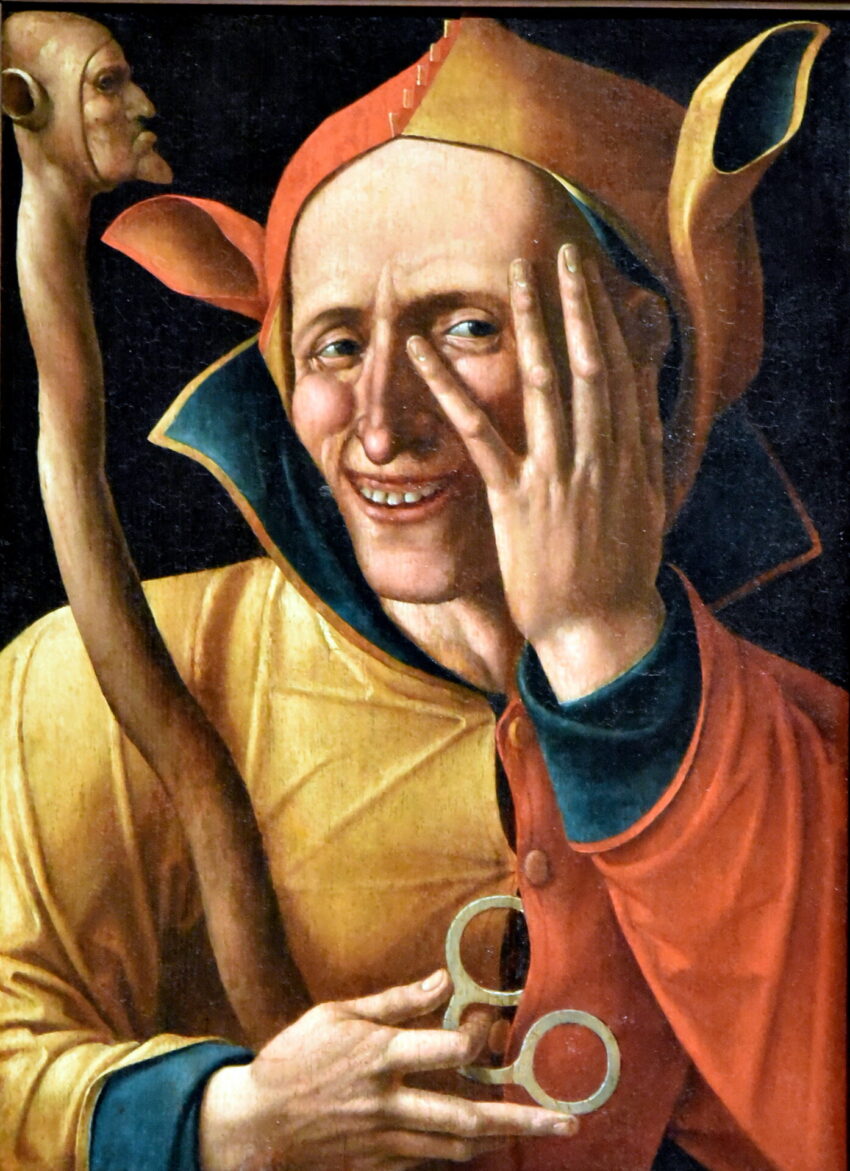
Image: Unknown artist, The Laughing Fool, c. 1540, possibly c. 1520.